
India’s startup ecosystem in 2025 looks very different from the hyper-growth phase of the last decade. Founders are no longer rewarded for scale alone. Investors, customers, and even teams are asking harder questions around efficiency, retention, and sustainable unit economics.
In this environment, growth infrastructure is becoming as important as growth itself. Tools that reduce operational friction, centralise data, and automate repeatable workflows are no longer “nice to have”. They are foundational.
This is where HubSpot for Startups fits into the modern startup narrative.
While recent funding and ecosystem reports do not directly reference HubSpot or its startup program, the broader trends clearly explain why platforms like this are gaining relevance across early-stage and growth-stage companies.
The 2025 Startup Reality: Efficiency Over Expansion
Recent ecosystem signals highlight three clear shifts shaping startup decisions today.
First, SaaS-led businesses continue to dominate venture funding, accounting for more than 60% of total investments in tech-first sectors. This dominance is driven not just by scalability, but by predictable revenue models and data-driven growth.
Second, there is a decisive move away from “growth at all costs”. Indian startups are now optimising burn rates, focusing on contribution margins, and prioritising customer lifetime value over vanity metrics.
Third, automation has become central to survival. Startups are actively replacing fragmented tools and manual workflows with AI-powered and integrated software that allows smaller teams to do more.
Against this backdrop, adopting an integrated CRM and growth platform is no longer about marketing alone. It is about building a resilient operating system for the business.
What HubSpot for Startups Typically Offers
Although not covered in the cited sources, HubSpot for Startups is widely known in the ecosystem for lowering the entry barrier to enterprise-grade tools for young companies.

Deep Discounts That Preserve Runway
Early-stage startups often struggle with software costs during their formative years. HubSpot for Startups typically addresses this by offering steep, tiered discounts on its full product suite. Eligible startups commonly receive up to 90% off in the first year, followed by reduced discounts in subsequent years.
For a seed-stage founder, this can mean access to advanced CRM, marketing automation, and analytics without the usual enterprise price tag.
One Platform Across the Customer Journey
A recurring challenge for startups is data fragmentation. Marketing data sits in one tool, sales pipelines in another, and customer support conversations somewhere else entirely.
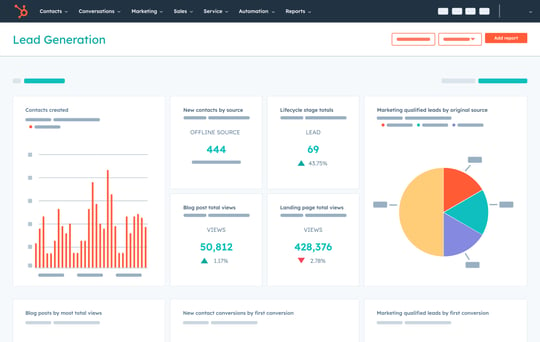
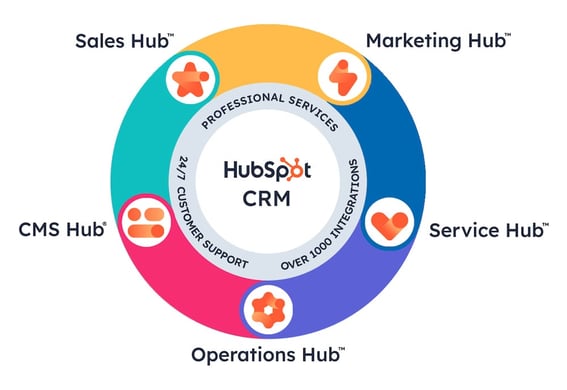
HubSpot’s integrated approach combines marketing, sales, content management, and customer service into a single system. This allows teams to track the entire customer journey from first touchpoint to long-term retention, without context being lost between departments.
In a lean startup environment, this reduces handover friction and improves decision-making speed.
Structured Learning and Onboarding
Tool adoption often fails not because of technology, but because teams do not fully understand how to use it. HubSpot for Startups typically includes guided onboarding, ongoing support, and access to HubSpot Academy.
For first-time founders and early sales or marketing hires, these resources help standardise best practices around lead generation, funnel optimisation, and customer engagement.
Community, Not Just Software
Beyond software, startup programs increasingly focus on ecosystem access. Participants in HubSpot for Startups often gain exposure to a global network of founders, accelerators, and investors.
In a market where partnerships and early credibility matter, this community layer can be as valuable as the product itself.
Why Integrated Platforms Matter More Than Ever
Modern startups, especially in SaaS and DeepTech, are building “AI-ready” foundations. Companies working on intelligent products understand that future automation depends on clean, connected data today.
An integrated CRM platform functions much like a central nervous system. Marketing signals inform sales actions, sales outcomes influence customer success strategies, and customer feedback loops back into product and content decisions.
When systems are disconnected, startups lose ROI through duplicated effort, inconsistent messaging, and delayed insights. Integration eliminates these siloes before they harden into organisational problems.
HubSpot’s Relevance in a Profitability-First Ecosystem
As startups tighten budgets and operate with smaller teams, the value of consolidation increases. Instead of paying for multiple point solutions and managing complex integrations, founders are gravitating toward platforms that scale with them.
HubSpot’s positioning aligns closely with this shift. It allows startups to start small, automate progressively, and retain visibility across their entire growth engine.
In an ecosystem that now rewards discipline as much as ambition, this approach fits the current moment.
The Bigger Picture
The Indian startup reset is not about slowing down innovation. It is about building smarter, more durable companies.
Tools like HubSpot for Startups are gaining attention not because they promise instant growth, but because they help founders build structure early, conserve capital, and make data-backed decisions as they scale.
For startups navigating 2025’s leaner, more accountable environment, choosing the right growth platform may be less about features and more about survival.
In that sense, adopting an integrated CRM early is not an expense. It is an investment in organisational clarity.


