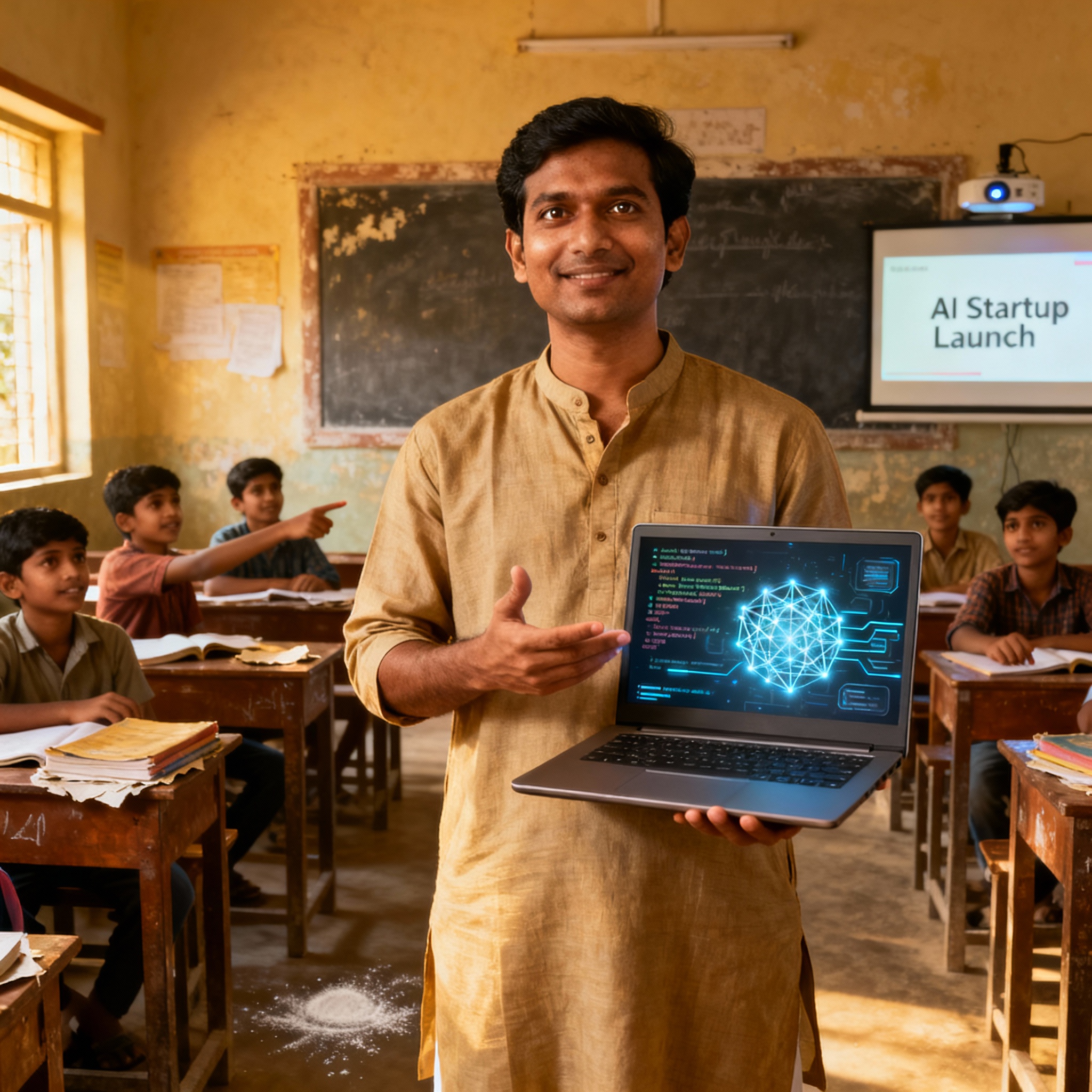
India’s artificial intelligence ecosystem is undergoing a decisive transformation. What began as an experimentation-heavy phase driven by research labs and pilot projects is now evolving into a revenue-first, DeepTech-led economy. The shift is being shaped by global leaders like Google and OpenAI, while Indian startups are simultaneously building indigenous infrastructure, focusing on profitability, and redefining how AI talent creates value.
This transition marks a critical moment: India is no longer just contributing talent to global AI—it is building its own AI economy.
Global Benchmarks Reshape India’s AI Playbook
The influence of global AI leaders is deeply embedded in India’s startup ecosystem. Companies like Google and OpenAI are not only setting technological benchmarks but also shaping investment priorities, product standards, and regulatory frameworks.
Google’s role extends beyond technology. Its backing of startups such as KAURIINK (TECH AT PLAY), which has developed an autonomous AI-powered sports broadcasting platform, signals strong confidence in India’s product innovation capabilities. Additionally, Google’s participation in platforms like Nasscom Emerge 50 ensures that global standards are directly influencing how Indian startups are evaluated and scaled.
At the same time, OpenAI’s dominance in large language models has created a global benchmark for performance. However, Indian developers and founders are increasingly focused on optimizing the cost-to-performance equation. While GPT models remain the gold standard, there is a growing push toward more cost-efficient alternatives like DeepSeek, especially for price-sensitive markets like India.
This balance between global performance standards and local cost optimization is becoming a defining characteristic of India’s AI innovation strategy.
From Research Labs to Revenue Engines
The most significant shift in India’s AI ecosystem is the move from experimentation to monetization. Startups are no longer just building prototypes—they are scaling products with measurable revenue outcomes.
CodeAnt AI is a prime example of this transition. Founded in 2023, the company has already achieved $2 million in annual recurring revenue within six months. Its AI Code Health Platform, which automates bug fixing and ensures security across multiple programming languages, demonstrates how AI can directly drive enterprise productivity.
Similarly, SCIKIQ Data is building foundational enterprise infrastructure through its “AI Nervous System,” enabling organizations to unify fragmented data and activate it for AI workflows at significantly higher speeds than traditional systems. This represents a move toward AI as infrastructure, rather than just an application layer.
Another major trend is the rise of domain-specific agentic AI systems. Startups like Acta.ai are developing persona-based agents that specialize in business functions such as HR, Finance, and Sales. These agents convert unstructured enterprise data into actionable outcomes, signaling a shift toward AI systems that don’t just assist—but execute.
The Rise of Agentic AI and Specialized Intelligence
India’s AI talent is increasingly focused on building agentic systems—autonomous AI capable of managing complex workflows.
This is a major leap from traditional generative AI. Instead of producing text or images, these systems are designed to take decisions, automate processes, and deliver outcomes.
The implications are profound. Businesses can now deploy AI agents as digital employees, capable of handling operations at scale. This not only improves efficiency but also creates entirely new business models centered around AI-native operations.
Workforce Transformation: Automation Meets Upskilling
As AI moves into core business functions, the impact on the workforce is becoming increasingly visible.
Startups are restructuring aggressively to align with AI-driven operations. Companies like Gupshup, Ola Electric, and VerSe Innovation have collectively reduced thousands of roles, replacing manual processes with automated systems. This is part of a broader industry trend focused on building lean, AI-first organizations.
However, this is not just a story of job loss—it is also a story of job transformation.
The demand for “AI-ready” talent is rising rapidly. Engineers, product managers, and business leaders are expected to understand AI systems, work alongside them, and leverage them effectively. Events like TechSparks 2025 are already focusing on bridging this skills gap through targeted masterclasses and training programs.
The new workforce is not just tech-enabled—it is AI-native.
Indigenous Innovation Becomes a Strategic Priority
Alongside global influence, there is a strong push toward building homegrown DeepTech capabilities.
Startups emerging from premier institutions like IIT Bombay and IISc Bangalore are developing foundational technologies that reduce dependence on global platforms. Lifespark Technologies is working on neurological care devices, while Agnit Semiconductors is advancing Gallium Nitride semiconductor technology—both critical areas for future AI infrastructure.
This focus on domestic intellectual property is crucial for India’s ambition to build a multi-trillion-dollar digital economy powered by its own technological backbone.
A Defining Shift Toward Sustainable AI Economies
The current transformation of India’s AI talent economy reflects a deeper structural change. The focus is no longer on building AI for hype—it is about building AI for impact, scale, and profitability.
Global benchmarks are guiding the ecosystem, but local innovation is defining its direction. Startups are prioritizing revenue, enterprises are adopting AI at scale, and talent is evolving to meet the demands of an AI-first world.
As this shift accelerates, India is positioning itself not just as a hub for AI talent, but as a global leader in AI-driven economic value creation.
The next phase of India’s AI journey will not be defined by who builds the most advanced models—but by who builds the most impactful, scalable, and sustainable AI businesses.